“Visiting Grandma” c. 1965

When I was a little girl in southern California in the 1960s, my parents would tuck me in to a makeshift bed in the back of their car and drive through the night across the desert to Tucson, AZ, to visit my dad’s parents. Driving through the night served two fine purposes for my young parents: escaping the heat of the day and making the trip go by quickly for me.

037a

Harold and Ruth, my grandparents, raised their family in Iowa. But after their three boys were married with families of their own, the couple retired to a teeny little house on the outskirts of Tucson. Their middle son (my dad’s big brother) and family lived in town.

061b

I loved Grandma and Grandpa’s place. If memory serves me well, it had two small bedrooms, a kitchen (with a big birdcage complete with screeching bird), a back sewing room with a big hot window, a screened-in front porch with a glider that made a scraping sound when it was in use, and a cautious but faithful road runner who would come to eat snacks Grandpa put out for him.

030b

Their place sat, with its small green front lawn and white picket fence, like a little vision at the end of a long, rut-filled, and dusty dirt road. Beyond the fence was one other house, a big green one where the kindly Flo and El lived (I loved to say their names!), and beyond that, long-thorned cacti and giant threatening jackrabbits. At least that’s how I remember it.

013b

The inside of that little house is somehow tied up with the colors in this blanket. Was it the linoleum in the kitchen? The ceramic tiles? The birdcage? Grandma’s dress? The fabrics in the sewing room? I don’t know for sure. But when I first put these sweaters together, before there was even a blanket in my head, I caught my breath — that’s like visiting Grandma and Grandpa! 

026b

 The blanket includes vintage buttons to go with the vintage colors :)

015b

I am one year old in the photo below, too small to remember much, but we made this trip many times until my grandma died six years later and Grandpa came to live with us. It’s amazing how much of my affection for the southwest part of this country grew up out of this tiny postage-stamp piece of land.

010a

I’m pretty sure the succulents currently growing inside my house in Illinois owe their little lives to my early and happy memories of Tucson.

036b

“Visiting Grandma”  (Size: 61″ x 82″)

This blanket is no longer available.

“Terra-Cotta Red”

100a

In the back of my mind, I always have an idea for “the next” Arts & Crafts style-inspired blanket I want to do. Two that have come to fruition are That 70s Throw and Ginkgo Leaves. And the same influence is visible in Life is a Gift (the poppies blanket)The Spruce Tree, and even in the flowers on Night Garden.

007a

This blanket is a little different. Terra-Cotta Red was prompted by a photo I have of an old terra-cotta wall with a fountain set into it.  It’s from a book about Craftsman-style homes.

020a

The  connection here to Arts & Crafts style is less about motif and more about the materials — particularly the earthenware tiles.

113a

The photo — and now this blanket — mentally transports me between Italy and California and back again. The reds make me feel the absorbed heat of the tiles and the dry Mediterranean air. The greens hint at the shade of towering trees to tame the heat. The sound of trickling water sweetens the setting. I imagine a worn wooden bench nearby where I can relax with a friend over coffees and conversation.

104a

It’s a bit of an anachronism to have this hanging on a picket fence in the Midwest’s thin spring sunlight. But hey. We do the best we can.

003a

“Terra-Cotta Red” (60″ x 75″)

A self-education

[I’m busy making blankets for an in-house environmental fair by a Chicago-area firm in May. I feel honored to be invited! I’ll post those blankets in a couple more weeks. Meanwhile, let me share some great books I’ve been *reading.]

022a

You folks already know I fell into making these blankets et al. by surprise. My daughter saw a magazine article and introduced me to the concept of reusing felted wool sweaters. So I simply got started, using the trial-and-error method of designing. It’s not a bad method, and I fall back on it often. But the more I designed, the more I found myself looking for guidance.

I began searching for books on design. The trails I followed kept leading me to graphic design or website design, not exactly what I was imagining. But then I happily ran into “Universal Principles of Design,” by Lidwell, Holden, and Butler, and Osburn’s “Secrets of Good Design for Artists, Artisans & Crafters” (a replication of a 1948 book). With these I began to better understand proportion, balance of all kinds, curves, weight, drawing the eye. I have several of their pages bookmarked and refer to them regularly.

029a

But color was still missing from my education. I would page through art books and magazines and study the colors. What did I like? What did I dislike? What made things work? There are lots of books on color theory, and I decided to start with Quiller’s “Color Choices.” Quiller has designed his own color wheel, conceiving of color in the way a painter does (which Quiller is). My bit of watercolor experience gives me a framework for understanding this. Quiller juxtaposes “sketch” paintings of the same scene done in different color combinations, so the reader can feel the effect of color. It’s a wonderful book…and has a side-effect of making me want to keep paints handy for experimentation.

033a

I found another interesting book while messing around on Amazon looking at color wheels. De La Roza in “An Eye for Color” provides incredible photos of all sorts of things and then breaks each entry down into the actual colors used. It’s fascinating to simply sit and study each page. And I found a color wheel that’s made for working with textiles — the “Rainbow Color Selector” by EK Success. All these tools are helping me consider color in new ways.

040a

That little color wheel led me to books by and for quilters, which in turn led me to check out quilters’ websites. Gah! They are amazing artists! See here and here and here, for instance. I feel right at home in these books. Although I am not a quilter, I am inspired by the ideas and colors and arrangements just the same. These wonderful books are Wolfrom’s “Adventures in Design” and Barnes’ “The Quilter’s Color Club.”

So there you are: a little peek into how I’ve been figuring out things as I go :). I’d love to hear from any of you out there who have explored wool-felting, designing with fabric, crafting of one sort or another, or anything else by pursuing a little self-education.

* I use “reading” somewhat lightly here due to the preponderance of pictures in all these books ;)

Beneath the cross

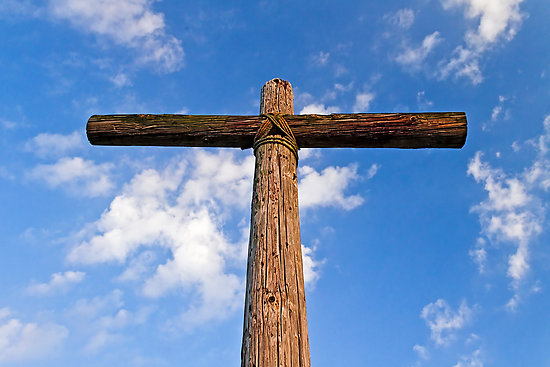
Every year on Good Friday, I like to take time alone to reflect on Jesus’ cross and how his act changed history and the world…and my life. This morning I was especially affected by one particular verse of the old hymn, “Beneath the Cross of Jesus.” It is worth sharing.

redbubble

Upon the cross of Jesus, my eye at times can see

the very dying form of one who suffered there for me.

And from my contrite heart, with tears, two wonders I confess:

the wonder of his glorious love and my unworthiness.

(You may follow the links below to find lyrics to the entire hymn and also to hear its beautiful melody.)

Photo credit: Kenneth Keifer

Hymn text: Elizabeth C. Clephane, 1830-1869

Hymn tune: Frederick C. Maker, 1844-1927

Why wool?

[I’m working on several projects I can’t post yet, so instead I’ll entertain you with some AMAZING things about wool.]

What’s so wonderful about wool? Why bother with it? Isn’t it itchy, hard to clean, and hot? Umm….no! (OK, some wools scratch, but we can avoid those.)

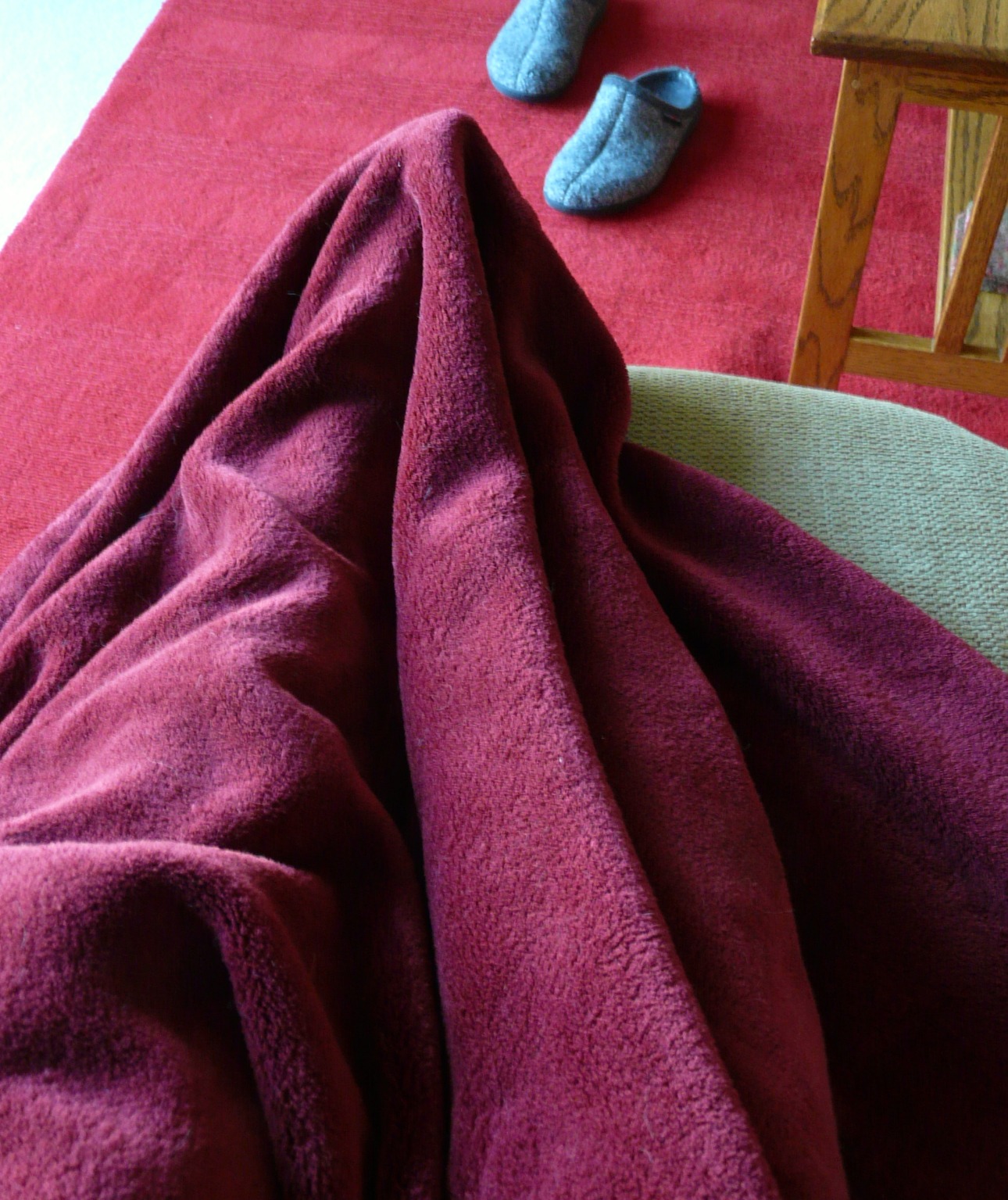
I thought about writing this post one morning when I was up early, wrapped in my robe, reading a good book with a steaming cup of coffee by my elbow, and a synthetic blanket on my lap. I was still cold. Here are my legs, covered with the synthetic fleece blanket —

006a

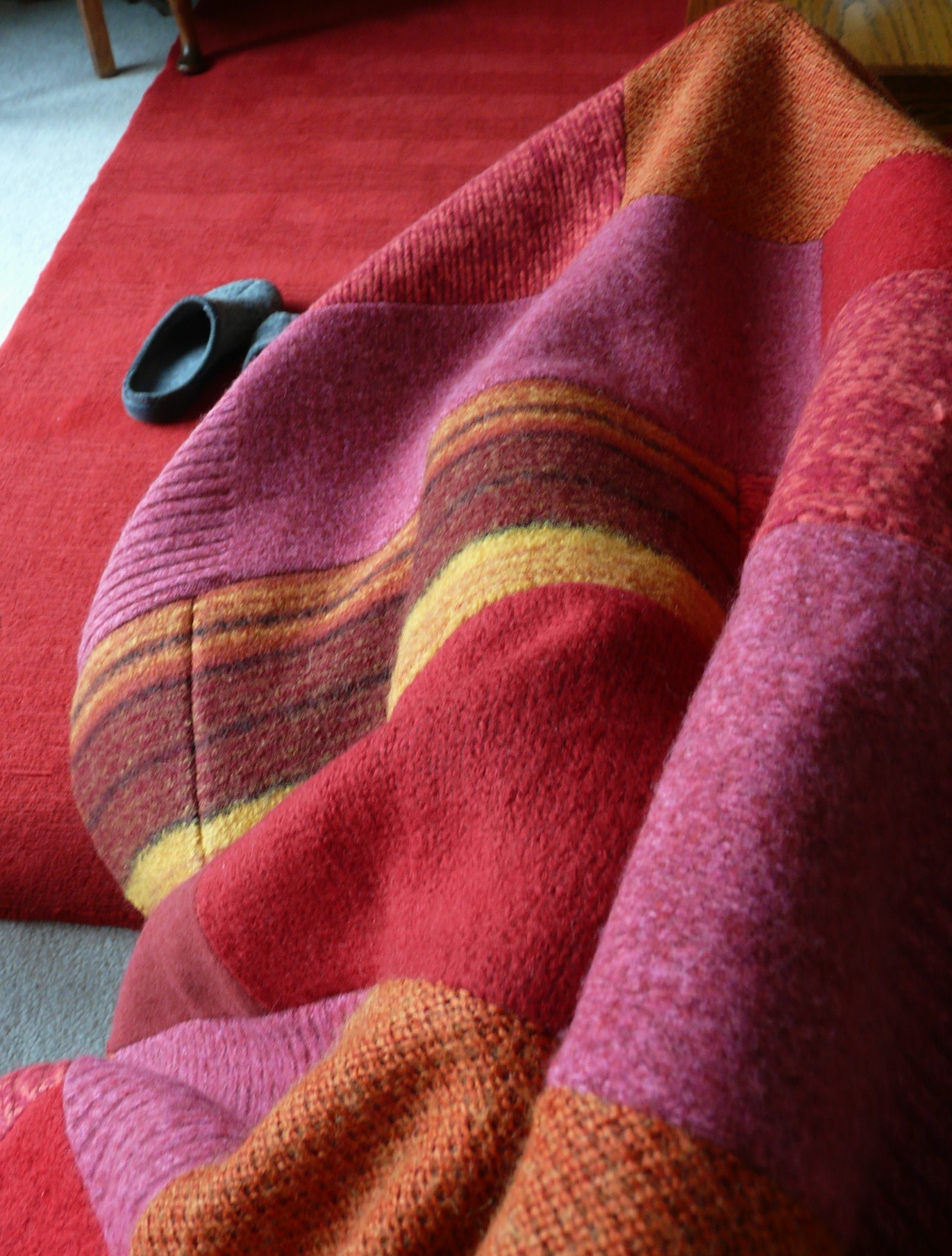
How dumb, I thought. What am I doing when I’VE GOT WOOL? So I got out one of my first blankets. This is Some Like it Hot.” It’s got great colors in it, but I was still learning the best sweaters to use, so it contains one (the orange) that I would no longer choose. Still. WHAT A DIFFERENCE. I immediately felt cozy and could read without distraction.

017a

`

For your trivia library, some amazing properties of wool:*

• Wool fibers insulate without overheating. They are historically used in both the heat of the desert and the coldest arctic climes.

• Many kinds of wool, especially Merino (because its shaft is so slender), are very smooth and extraordinary comfortable on skin.

•  Wool wicks moisture away from the body.

011a

•  Wool fibers actually absorb water and move it temporarily into the core of the shaft, keeping the wearer warm and dry. It won’t feel wet to the touch until it has absorbed 60% of its weight in water.

•  Wool has antimicrobial properties, so it doesn’t harbor odors and stays smelling fresh — in fact, backpackers and bikers are returning to the use of wool, as synthetics cannot yet mimic this.

•  Wool is disliked by dust mites, which are behind many allergies and asthma troubles.

•  Wool in blankets by The Green Sheep has already been washed and dried, so you can carefully do the same with really great results! (See here for directions.)

008a

• Wool holds dyes better than many other natural fibers. (This is one of my favorite properties.)

• Wool is long-lasting. Wool fibers can bend 20,000 times without breaking. Compare that to cotton at 3,000x and silk at 2,000x.

•  Buying wool supports raising sheep for their fleece rather than for food. Every year a new fleece grows on the sheep’s body and is removed without harm to the animal.

•  Buying wool supports local farmers throughout the world. Also, processing wool requires fewer resources than those needed to process most other natural or man-made fibers.

*With gratitude to the following websites for their informative content: Wool Revolution!, Zeilinger Wool Co., and Dennis Baxter’s article on Merino wool on ezinearticles.com.

Shearing in the Shade

On a recent Saturday morning, my Hub and I rose at the crack of dawn to drive from our home in northern Illinois around the tip of Lake Michigan and up the opposite coast to Holland. We travel this route often because our daughter and her husband live there.

003a

This time, however, we had a different destination. We were headed to Shady Side Farm so I could watch some sheep being sheared. My man was kind enough to come along :)

007a

About a year ago, I learned about this farm and their Shearing Day, which they open to the public as an educational event. I’ve been looking forward to it ever since. In part, it was a way to recognize and honor the animals which provide this AMAZING fiber I so love to work with.

127a

As we drove up the lane, we were met by a neighbor who was helping out. “Is this your first shearing day? Welcome! You can park right here. There’s the barn where they’re shearing the sheep — just go right on in!”

014a

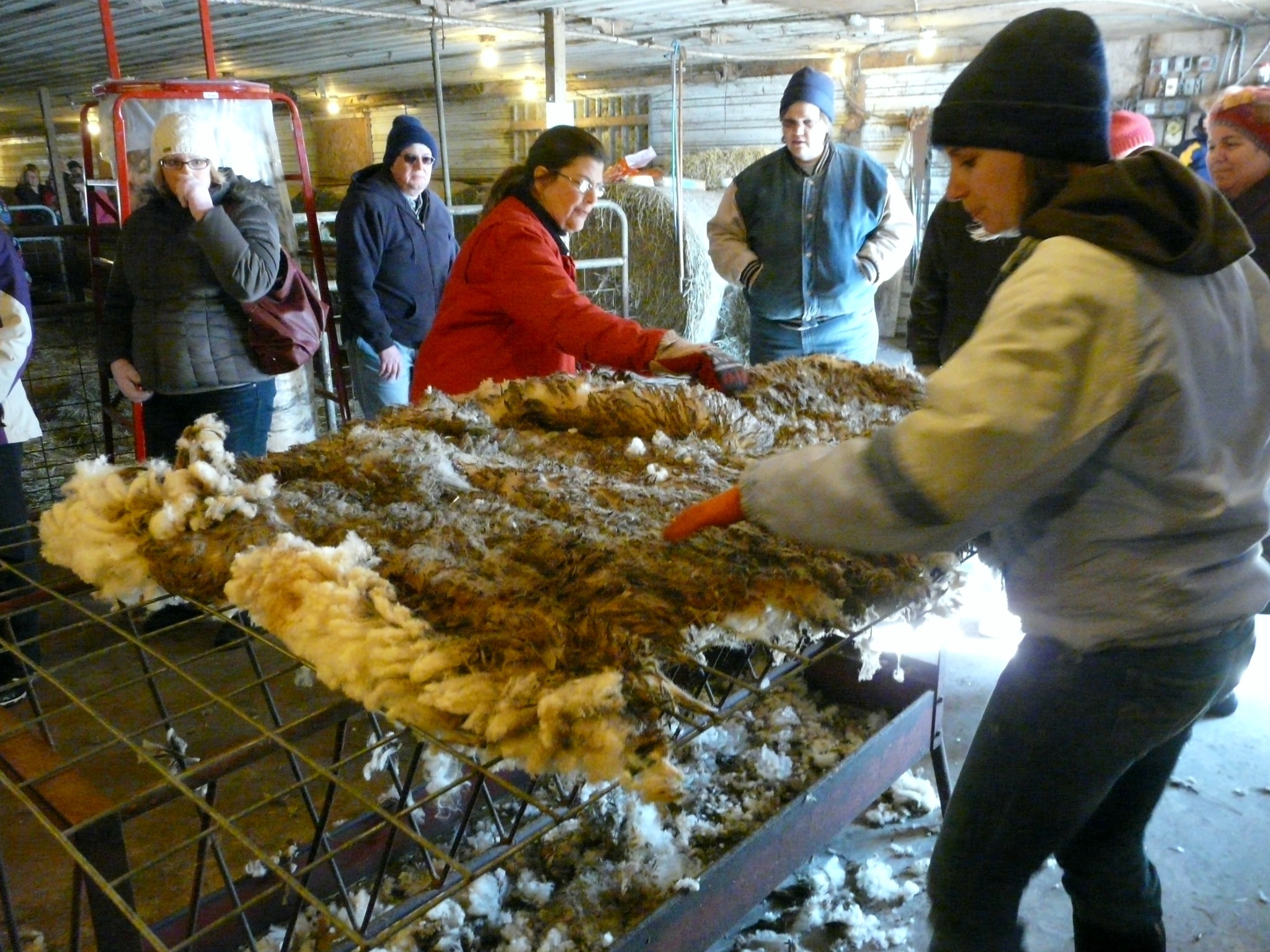
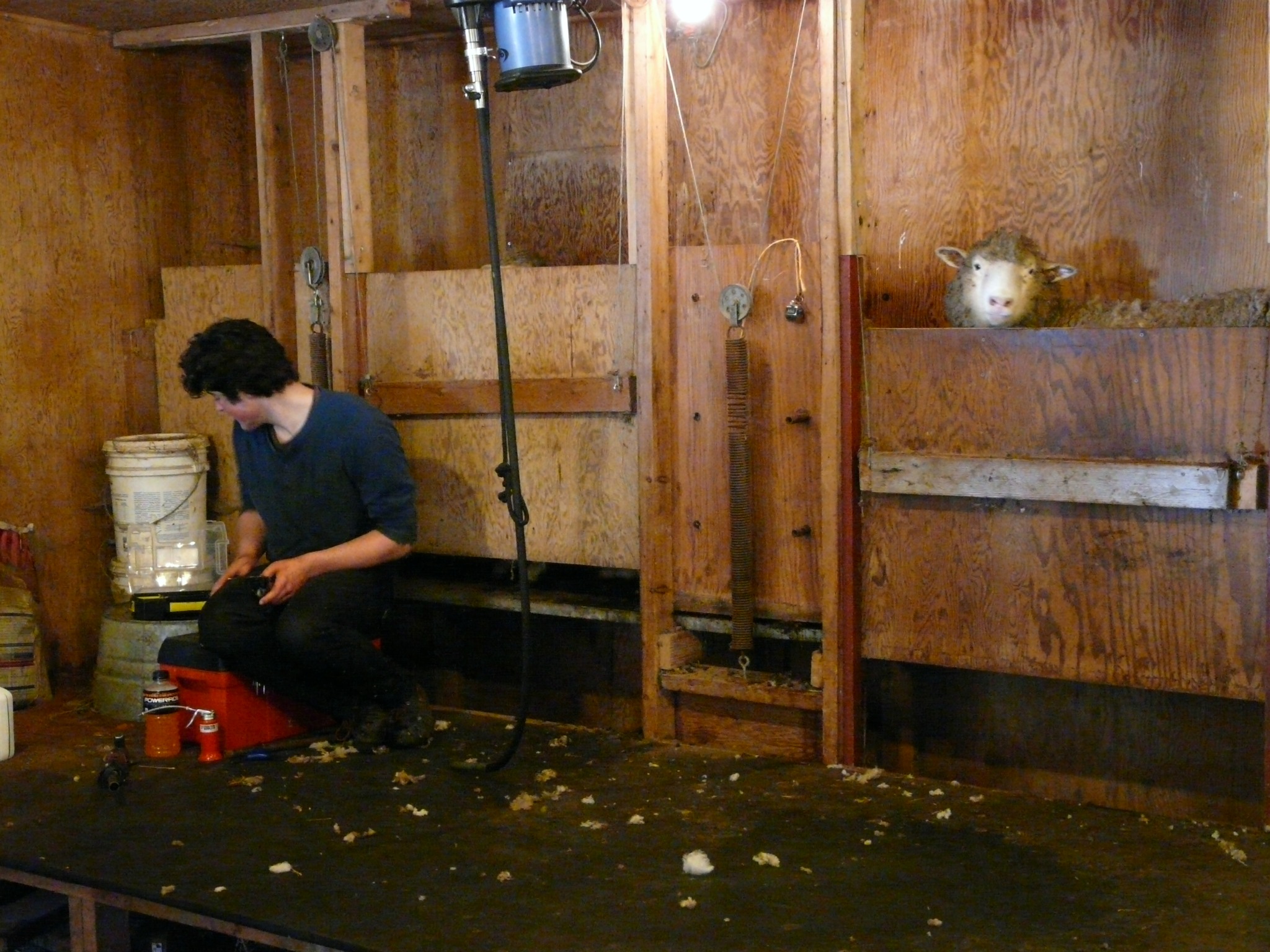
The barn is a long, low building with a staging area for the shearing and several animal pens. Upon entry, our first sight was of a just-sheared fleece being tossed, dirty side up, onto a rack to be “skirted” — which means the visible debris gets picked out before the fleece is set aside for processing later.

015b

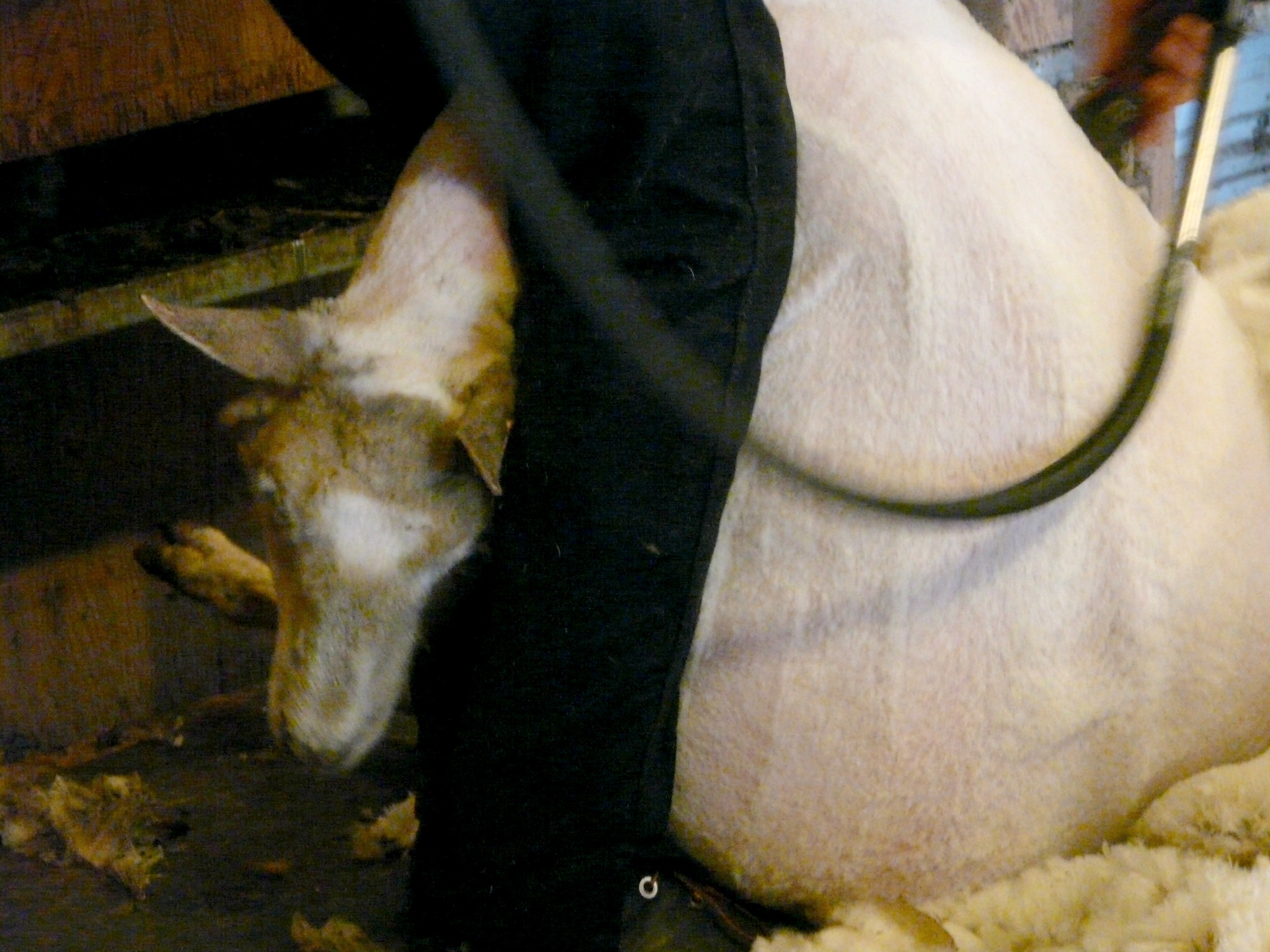
Just beyond that, the shearer was wrangling a very pregnant sheep into a sitting position to get her haircut. We learned that perfect timing for shearing is just before lambing so that, after giving birth, the mamas can better share their body heat with their young ones and the lambs can more easily find their mamas’ milk.

034a

This shearer, just 20 years old, can shear an entire sheep in less than 5 minutes. The sheep do not struggle against him, no matter what position he puts them in, as long as they feel secure within his hold. He sheared about 80 sheep before the day was over!

037b

As soon as the shearer lets go, the agitated ewe — looking like a skinned mango! — is up and dashing back to the familiarity of the pen.

045a

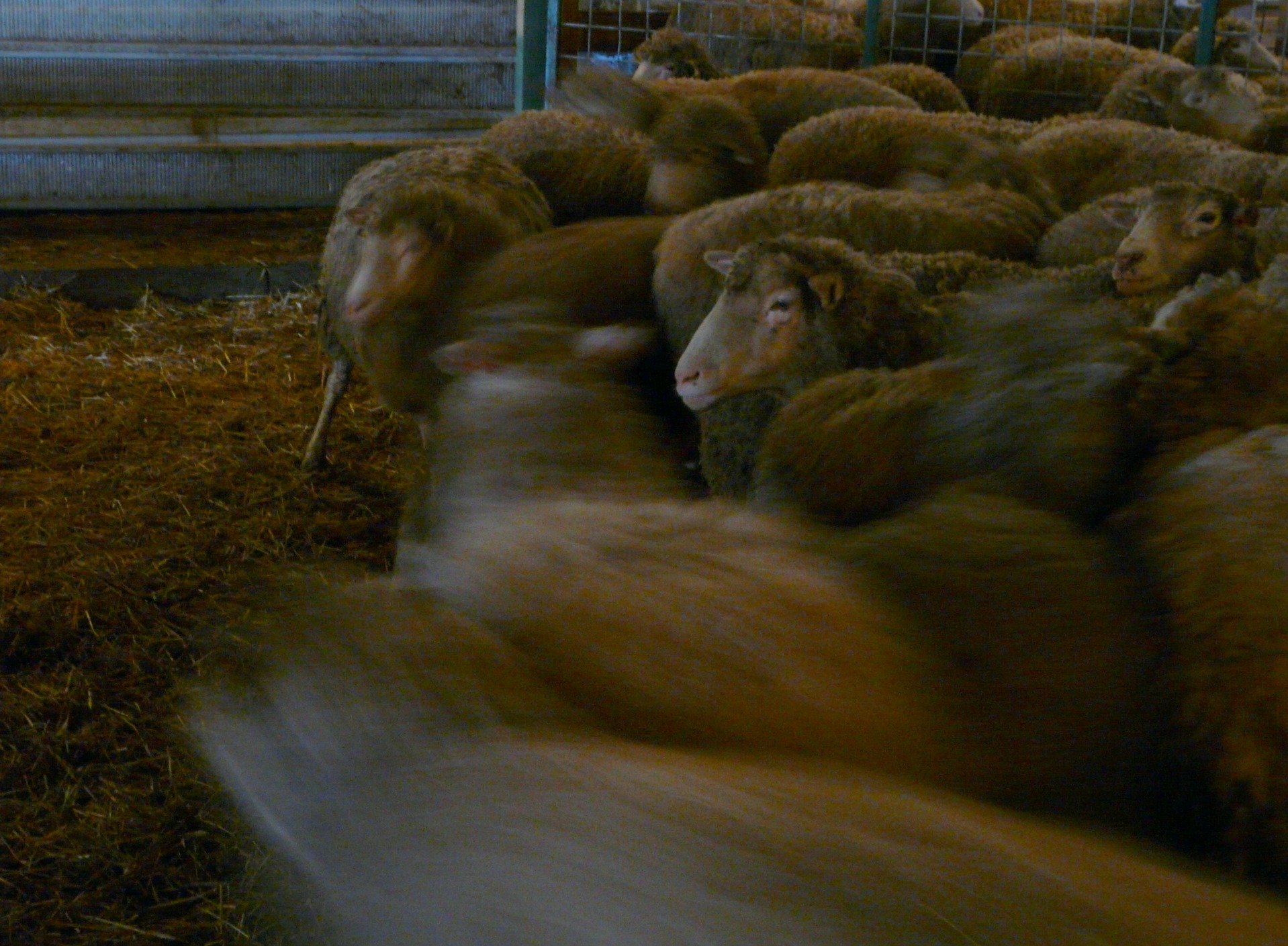
She trots past the holding pen where the others await their turns.

116a

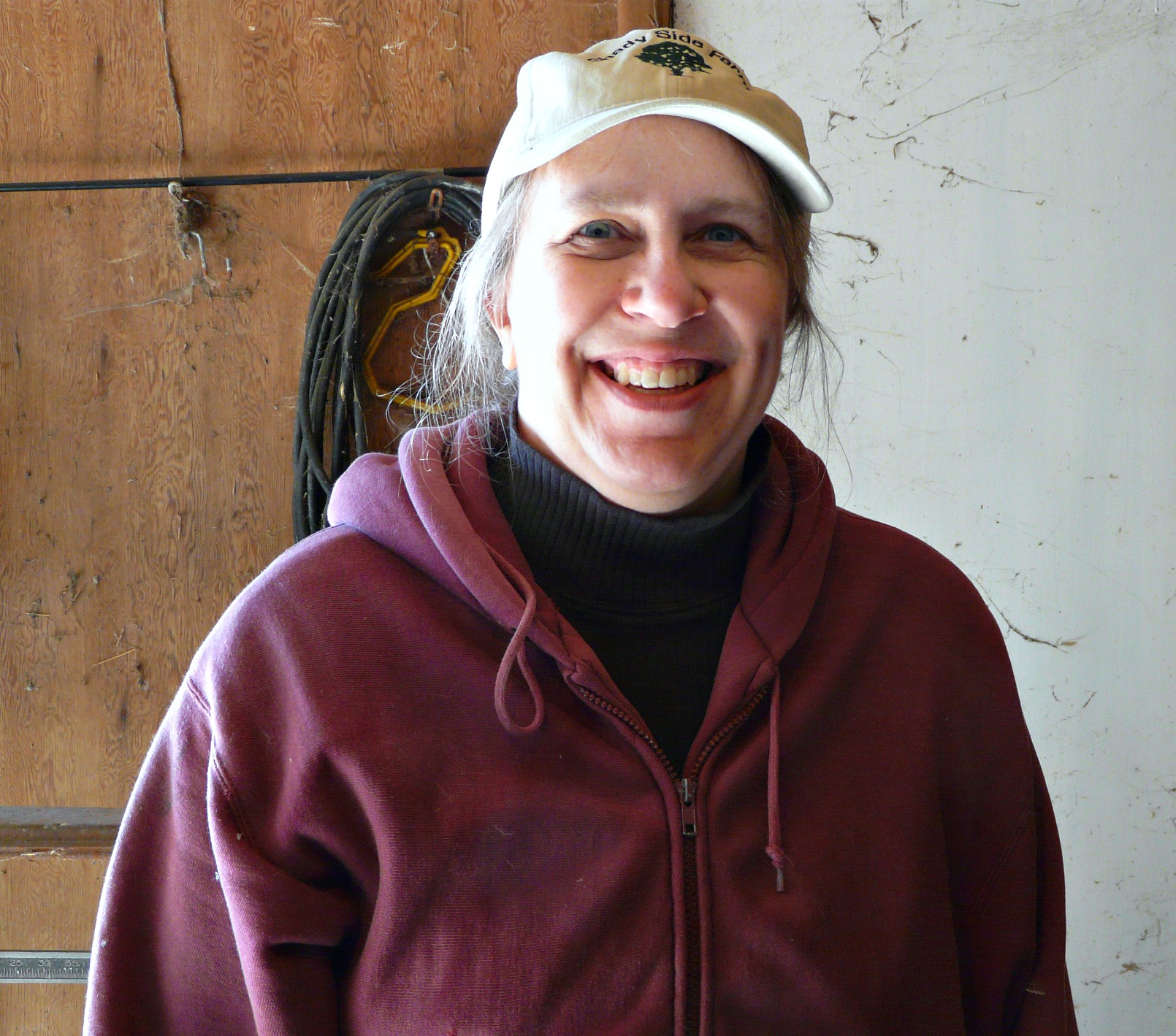
This is Lona, the Farmer’s Wife (and a fellow blogger over at Farming in the Shade). She had this smile on her face every time I saw her! I asked her how they happened to open shearing day up to the public.

092a

She said it was triggered a handful of years ago by a comment she saw online, ruing the “fact” that sheep had to sacrifice their lives in order for people to get the wool! She was astounded by this misunderstanding and decided to do something about it. Shearing Day was born.

130a

And they’re doing a great job. Please click on over to Lona’s blog to find more photos of a really interesting day. The process is described here in much better detail than I have done.

HEY! By the way, did you know…

110a

…? Yeah, neither did I. Wool. It’s amazing!